The development of the next generation is a key focus area within family governance, family offices, banks, and among advisers. However, interest in the development of the current/experienced/older generation often ends once succession has taken place—or the will has been finalised. This risks overlooking a significant ownership resource and, on a personal level, may result in the next 30 years being less rewarding, enriching, and exciting than they could be.
Why Wind Down When You Can Transform?
Succession has been planned—and perhaps even completed. And it’s often only once the founder’s name is removed from the organisational chart that thoughts begin to form about what should come next. Plenty of golf? Travel? More time to enjoy the wine collection? While these are all wonderful and desirable pursuits, they’re not always enough.
That’s why the transition to the next chapter should begin much earlier in the ideal transformation strategy process for the next stage gen—that is, the generation aged 65 and over.
One of the key points is that considerations around transformation should begin well before stepping back from active involvement. Planning the next chapter and its content can be done together with a partner, the family office, the next generation, or other trusted advisers. The process should be prioritised, structured, and a source of joy and engagement for what lies ahead.
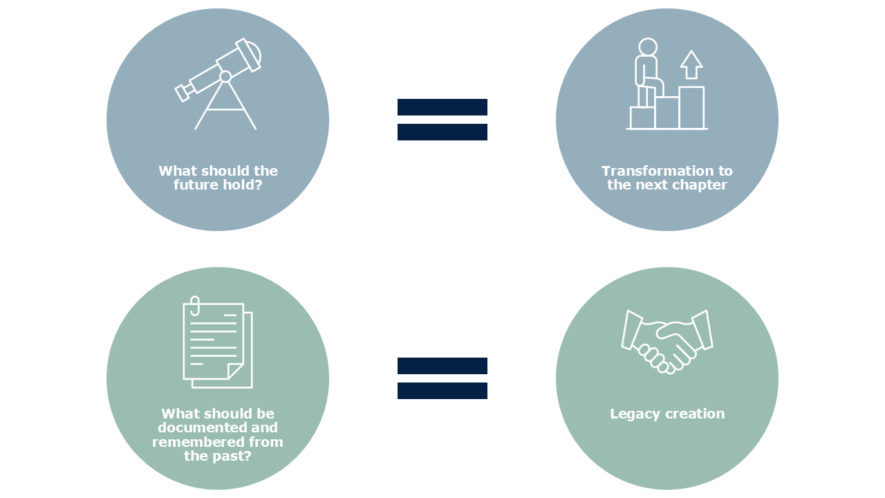
As a framework, you can use these two guideposts:
What Should the Future Contain?
Many of us will live to be 100 or more. Therefore, the next chapter may well last 30–40 years. This final third of life has every opportunity to become the best years—especially when good health and resources are in place—and this life phase deserves careful planning and structure.
But what should the next phase include? Here is some inspiration in the form of questions that can help bring structure to your plans:
- How many hours per week would I like to dedicate to professional activity?
(This might include board positions, advising others, launching a new venture, investments, networking, etc.)
- How many of those professional hours should be dedicated to advising the next generation on ownership?
- What would that job description look like?
The point of defining your contribution to the family business or wealth community—and drafting a job description—is to formalise an agreement with your children or successors about what they can expect in terms of professional input and sparring.
This expectation alignment around the involvement of the next stage gen is just as important as the pre-succession conversation with your children about how active they plan to be in the family enterprise or wealth community.
Clear agreements on engagement and structure are perhaps the most important tools for avoiding family conflicts and ensuring the right leadership to drive growth and momentum in the family’s activities.
Personal Development and Contribution to Society
In the transformation process, it’s also exciting to consider how next stage gens can engage with the world beyond the family’s activities, which they may already be passing on to others.
To find a new place in society, one might consider:
- Could I launch or support a political initiative?
- Might I act as an adviser to entrepreneurs?
- Do I have a desire to pursue new learning and expertise—perhaps in technology, ESG, politics, investments, or other fields?
- Which passions, hobbies, and experiences do I finally have time for, and how will I structure them?
The more concrete activities there are to look forward to, the easier it becomes to let go of full or partial control over one’s life’s work, family business, or wealth collective.
What Should the Legacy Contain?
Beyond planning for the future, the transformation process can—and perhaps should—also include documenting and shaping your legacy. This documentation is not only for the next stage gen’s own sake but also for their descendants, who may benefit from understanding how the business or fortune was created.
The story can be told in many ways: A film with interviews, a book, a room with souvenirs and memories at the company’s premises. To be as educational as possible, the story should ideally include:
- What should people learn from her/his experiences?
- What crises did she/he/the business endure, and how were they overcome?
- How was her/his drive and ambition formed?
- What are her/his hopes for future generations?
For many, the legacy will also include leaving a positive mark on the world. This could involve: Establishing a grant for young entrepreneurs, supporting awareness of specific education paths or institutions, engaging in strategic philanthropy through a foundation or other philanthropic activities. Taking on the role of patron in this next chapter can be deeply rewarding and is a way to create a legacy that will endure.
At Harbour we design tailored transformation programmes for next stage gens who do not see themselves as pensioners. We focus on identifying roles where the individual can contribute value to the family enterprise, wealth community, and future generations in a way that nurtures harmony within the family.
Feel free to contact us to learn more. We also recommend further reading in our articles on strategic philanthropy and legacy.